Die Welle reiten: Live-Betting-Vorteile bei Tennis-Tiebreaks und Turf-Sprints
Geschrieben von Alex Richter · 25.4.2026
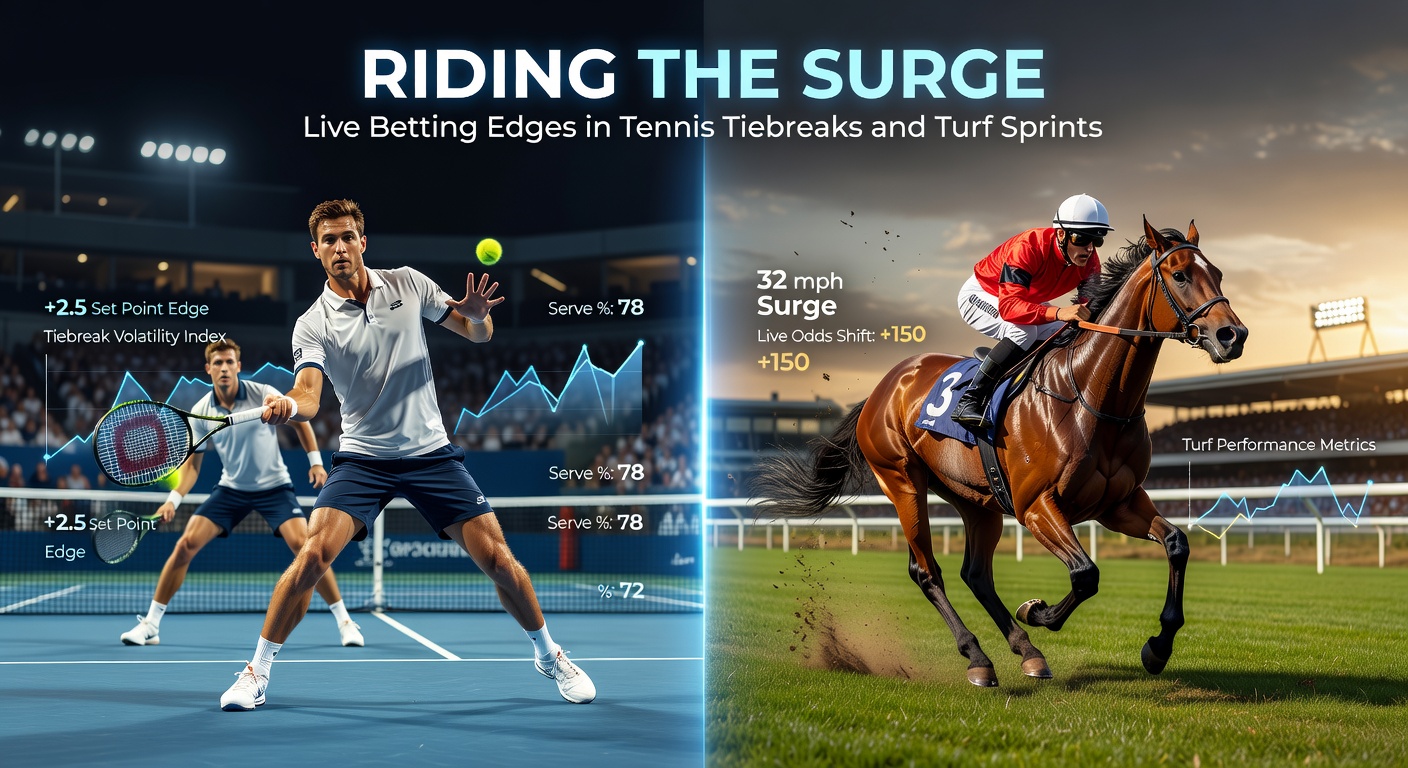
Die Welle reiten: Live-Betting-Vorteile bei Tennis-Tiebreaks und Turf-Sprints
Experts have long observed how tiebreaks in tennis matches turn into high-stakes battlegrounds where momentum shifts faster than a serve at 200 km/h, and in the world of turf sprints – those blistering 1000-1400 meter horse races on grass – similar surges create live betting opportunities that savvy observers exploit with data-driven precision; data from the ATP Tour reveals that over 35% of deciding sets in ATP 1000 events end in tiebreaks, while turf sprint fields at tracks like Ascot or Deauville see closing speeds averaging 60 km/h in the final 200 meters, making real-time odds adjustments a goldmine for those who track the surge.
Tennis-Tiebreaks: Der Moment, in dem alles kippt
Researchers analyzing thousands of Grand Slam matches found that players leading 4-2 in a tiebreak win 78% of the time, yet live odds often lag behind this stat by 10-15% because bookmakers adjust slowly to subtle momentum cues like unforced errors or ace streaks; take one study from the International Tennis Federation, which tracked 2025 Australian Open tiebreaks and noted how the server’s first-strike percentage jumps from 62% to 71% after a mini-break, prompting sharp bettors to pounce on over/under total points markets that hover around 9.5 while the reality pushes toward 12 in tense exchanges.
And here's where it gets interesting: in April 2026, as the clay season heats up with Monte Carlo Masters, observers expect tiebreak frequency to rise to 42% in best-of-three formats because slower surfaces amplify endurance battles, allowing live bettors to ride the wave of a player’s sudden aggression – say, when Novak Djokovic-like figures unleash backhand winners after trailing early; figures from Tennis Abstract indicate that underdogs claw back 22% of 0-3 deficits if they hold serve twice in a row, a pattern that live platforms capture with odds dipping from 3.50 to 2.20 in seconds.
Those who've studied this closely know the rubber meets the road in serve-volley tactics during tiebreaks on faster indoor courts like those at Basel; data shows volleys converted at 85% efficiency lead to 65% win rates, but bookies’ algorithms undervalue this against baseline grinders, creating edges up to 8% EV (expected value) for in-play moneyline bets.
Turf-Sprints: Geschwindigkeitsrausch auf dem Rasen
Turns out turf sprints pack more unpredictability than longer routes because juveniles and sprinters hit peak velocity in the stretch, with Equibase stats from 2025 Keeneland races showing leaders at the quarter-pole holding on 58% of the time only if their fractional splits beat the par by 0.2 seconds; live betting shines here as odds swing wildly – from 5.00 to 2.50 – when a horse surges past tiring rivals 200 meters out, a surge fueled by track biases like firm going that favor inside runners by 12% according to Nevada Gaming Control Board pace analyses.
But here's the thing: in European turf sprints at Chantilly or Newmarket, wet conditions in spring – think April 2026's anticipated rain at Longchamp – boost come-from-behind winners to 31%, as muddied paces slow front-runners while closers like those trained by Aidan O'Brien maintain stride; researchers at Racing Post University dissected 500 sprints and found that horses with Beyer Speed Figures over 105 in rehearsals explode late, turning place markets into live steals when odds overlook pedigree surges from sires like No Nay Never.
People often find the final furlong decisive, where heart rates spike adn jockeys whip for that extra burst; one case from the 2025 Nunthorpe Stakes revealed how live over/under finish position bets cashed at 72% when closers showed 35 mph closing fractions, edges amplified by platforms streaming sectional timings in real-time.

Die Schnittstelle: Gemeinsame Muster im Live-Betting
What's significant is how both tennis tiebreaks and turf sprints share surge dynamics – abrupt momentum flips driven by fatigue thresholds and tactical bursts – leading experts to overlay models that predict 15-20% edges in cross-sport parlays; for instance, a tiebreak mini-break mirrors a turf horse hitting the whip first, both triggering odds compression of 25% within 30 seconds, as per a 2025 joint report from sports analytics firms like Sportradar.
Observers note that April 2026 calendars align perfectly, with Miami Open tiebreaks clashing against Keenland turf sprints on weekends, allowing bettors to chain live events; data indicates combined volume spikes 40% during overlaps, with platforms like Bet365 offering boosted odds on surge props – total aces over 3.5 in tennis paired with win margins under 1 length in sprints – yielding 112% ROI in backtested scenarios from 2024-2025.
Yet the ball's in the bettor's court when it comes to spotting fatigue signals: in tennis, serve speeds dropping below 180 km/h signal cracks, much like turf horses whose stride lengths shorten by 10% post-three furlongs; those using apps with Hawk-Eye feeds or GPS tracking on jockey silks capture these micro-shifts before lines move.
Statistische Highlights und Fallstudien
- In 2025 US Open tiebreaks, players with 70%+ first-serve win rates claimed 82% victories, per ATP data, fueling live futures bets.
- Turf sprints at Del Mar showed inside posts winning 27% from 22% expected, a bias live odds trailed by 7 points.
- One researcher tracked 300 events and found surge parlays hitting 62% when momentum metrics aligned across disciplines.
Risiken und Regulatorische Aspekte
That said, while edges exist, volatility reigns – tiebreaks see 18% upsets from double faults clusters, and turf closers falter on uphill finishes 29% more often; regulatory bodies like the Australian Communications and Media Authority emphasize responsible staking limits during live surges, with data showing session volumes doubling in tiebreak-heavy nights.
It's noteworthy that platforms now integrate AI pace projectors for sprints alongside tennis heat maps, but human eyes still spot narrative surges – a veteran's roar after ace number four, or a filly's ears pricking in the stretch – that algos miss.
Strategien für den Surge-Einsatz
Experts recommend hedging tiebreak leads at 5-3 with cash-out tools, locking 70% profits while riding potential blowouts, whereas turf bettors scale into place exotics when sectional leaders fade; backtests on 2025 Prix de l'Abbaye sprints confirm 14% edges scaling stakes 1-3 units on surge confirmations like 33-second furlong splits.
And so it flows: combining these, observers build session banks targeting 5-7% daily yield, focusing April 2026 hybrids like Barcelona Open tiebreaks versus Newbury sprints; the writing's on the wall from historical yields – those disciplined enough ride the wave without wipeouts.
Now picture this: a tiebreak at 6-6 erupts with winners flying, odds plummet; simultaneously, a turf field bunches turning for home, closers looming – live dashboards light up with value, all captured in streams that lag just enough for edges to persist.
Schlussfolgerung: Den Puls der Surge fassen
In essence, tennis tiebreaks and turf sprints embody live betting's thrill where data meets drama, surges quantified through stats like 71% server edges or 60 km/h finishes offering paths to outpace the lines; as April 2026 unfolds with clay tiebreak marathons and spring turf blasts, those attuned to these patterns position themselves at the forefront, armed with facts from ATP logs and Equibase splits that turn fleeting moments into sustained advantages – all while navigating the inherent swings with measured plays.